1000% Reviews

Latest Reviews

  • The Beauty of Brandon Sanderson’s Cosmere

    The Beauty of Brandon Sanderson’s Cosmere

    If I had to describe Brandon Sanderson’s works, it would be like frequenting your local five-star escape room business, where every room offers you a distinctive experience, complete with a unique story, theme, and puzzles, yet you always get the sense that the same creative mind is behind every curtain.

    Now imagine all those rooms have puzzles and hidden story elements that subtly hint towards some sort of connected continuity with all the other rooms, despite their vastly different themes. This is the Cosmere.

    So, for the uninitiated, what is the Cosmere?

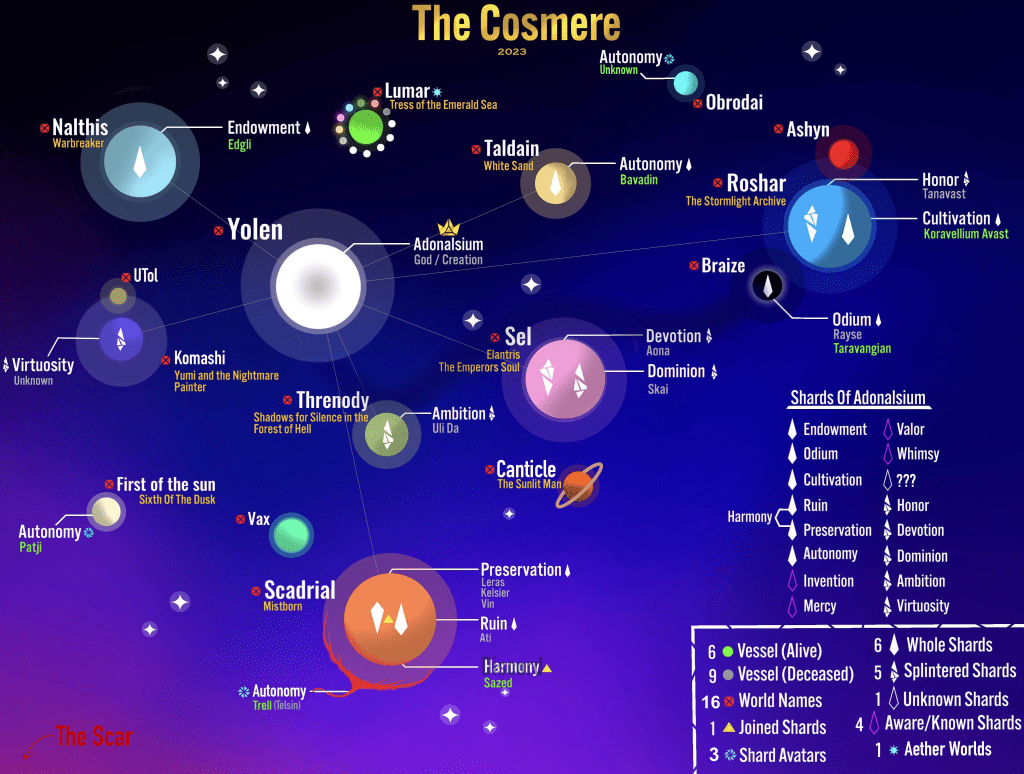
    Well, it’s a universe, quite literally. Well, more specifically, it’s a universe populated by dozens of planets and solar systems. Many of these planets are barren, however, a select number of them have a “god” (or multiple “gods”) tied to them. These “gods” were once part of a single god, however, a group of sixteen people killed and shattered the god into pieces. Each of them got a “shard” which represents a personality trait of the original god. These “shards” made these people gods in their own right, but it also slowly shifted their personalities to the shard that they held. They would soon disperse to different planets, or create their own new planets, dictating the systems of the planet, creating life, and investing themselves in the very ecosystems of the planet (also known as investiture).

    Each Cosmere series/novel takes place on a different planet. Like most escape room businesses, the stories are not directly connected. As such, the reader can start at any series or one-off novel within the Cosmere, and not feel lost.

    Posted by Galdon13579 on Reddit

    Within the Cosmere, there are three planes of existence: the physical realm, the cognitive realm, and the spiritual realm. Without getting too into the weeds, the distance from one planet to another is immeasurable in the physical realm (at least before technology progresses into space), however, in the cognitive realm, one could simply walk between planets. The only problem? It’s not easy to get into the cognitive realm as a human. As such, each book within the Cosmere will have a few references to other worlds. There may also be a few characters that reoccur between books or may seem out of place. Thankfully, the first-time reader is not expected to understand these references. They don’t need to be understood. In fact, oftentimes, they aren’t meant to be understood in a first read-through.

    That is the beauty of the Cosmere. Sanderson writes his novels in such a way that all his systems intricately connect deep enough to allow for analytical-minded folks to chew on, while also providing an engaging story for the casual reader. Sanderson does this while also giving himself enough flexibility to create new stories, worlds, and magic systems without breaking the continuity of what has been built before.

    My Experience

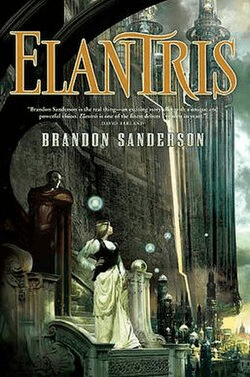
    I first entered the world of Sanderson through his first Cosmere novel, Elantris. Many people consider Elantris one of the author’s weaker entries given it was one of his earlier works, however for me, it couldn’t be more of a delightful treat to get me back into the world of books. At the time, having not read a novel in a while, Elantris was my attempt to find something to draw me back into books. Consider it a success.

    (Warning: Minor Spoilers Ahead)

    Elantris is told from three perspectives. First is Prince Raoden, a man who is next in line for the throne of Arelon and is to marry soon. However, one day, he wakes up to find himself covered in dark splotches and looking disfigured. He had been taken by the Shaod. Once, those who had been taken by the Shaod became glowing figures with incredible abilities. They would move to the glowing city of Elantris to be with others who had the same abilities. However, at some point before the start of the book, disaster struck the Elantrians when their skin turned to dark splotches and their city darkened and began to crumble. Now, those taken by the Shaod are covered with the splotches and locked in the disgraced city of Elantris. Raoden is forced to learn to survive within the city and find a way out.

    The second is Princess Sarene, the woman who was to wed Prince Raoden. Upon arriving in Arelon, she is immediately told she is a widow and that Raoden is dead. She soon becomes suspicious of the circumstances behind his “death” and is determined to find out the truth.

    Finally, we have Hrathen, a high priest who follows Shu-Dereth and is trying to peacefully (but forcefully) convert the country of Arelon to the religion while avoiding religious conflict.

    Throughout the book, the fates of each of the characters increasingly intertwine as the stakes grow higher and higher for what will become of Arelon.

    The magic system within this world (the planet, Sel) is called the AonDor. It involves drawing “Aon” symbols using energy from the “Dor”. These symbols give unique abilities like creating objects, healing, and much more. Most of the magic systems within the Cosmere are based around some form of spiritual “investiture” from the god associated with the world.

    There is also generally some form of religion within most of Sanderson’s worlds. Elantris is no exception. Within the planet of Sel, there are two major religions: Shu-Dereth and Shu-Korath, both of which derive from Shu-Keseg. There is also a more cult-like offshoot called the Jeskeri Mysteries.

    Even in his earlier novels, Sanderson is able to masterfully weave religion in such a way that it does not feel out of place or preachy and is often instrumental in the plot of his stories.

    Personally, I really enjoy the way Sanderson intertwines his character-centric storytelling with the world itself. In many novels, the author will either focus on the worldbuilding at the cost of the characters themselves, or they will focus too much on the characters, only using the world as a backdrop/playground for the characters, making the world almost immutable.

    Sanderson writes in such a way that the characters take center-stage, where their actions leave a mark on the world while still allowing time for the world itself to breathe. There is a sense that the world is not just a stage for the characters, but an active force that shapes them just as much as they shape it. In many of Sanderson’s stories, there is a clear layer of interplay between the world and the characters.

    (Warning: MAJOR Spoilers Ahead)

    In Elantris, we discover that the Shaod became a curse because an earthquake reshaped the continent’s landscape. Since the symbols of the AonDor are drawn to mirror the surrounding geography, this shift broke the magic system entirely. The world itself changed, and the characters suffered the consequences. In this way, Raoden’s journey towards discovering and fixing this directly links him to the world, and by extension, the magic systems that dictate it. This really emphasizes the worldbuilding Sanderson has done while keeping the focus on Raoden.

    This interplay between the worlds becomes even more apparent in some of the other series within the Cosmere. In both Sanderson’s first Mistborn Trilogy and the Stormlight Archives, we see worlds that are literally crumbling around the protagonists as they do what they can to influence and change the fates of these worlds.

    By tying the actions of the characters to their worlds, when a character does appear in another series, it feels like they are bringing a piece of their world to another world. In fact, this is often how the reader can tell there is a character out of place. It isn’t through name dropping (unless it’s Hoid…) but rather through subtle references of dialogue or physics that seem out of place for the series.

    Conclusion

    Like the escape room, Elantris is only one experience of many. If you’re looking for a story epic in scope, the Stormlight Archives is the way to go. If you’re looking for a more contained, but high stakes story, Mistborn is the way. Each of these series is their own unique experiences, but in one way or another, they are all connected, whether through the Cosmere or by Sanderson’s unique storytelling. All in all, I encourage you to step into a room and experience it for yourself!

  • Surviving the Attention Economy: My Experience as a Consumer

    Surviving the Attention Economy: My Experience as a Consumer

    Today, it feels like everything in our modern world is driven by attention. Our computer’s offers endless entertainment just clicks away. Our TV’s always give us something to watch. Our phone’s ensure we never have a break in-between consuming. As coined by  Herbert A. Simon, what we are living in, is an attention economy.

    Herbert A. Simon was an American Psychologist who coined the term “Attention Economy” in the 1960s to describe the problems of information overload

    Now before I dive into my experiences, I want to first break down the term “attention economy”. As the term suggests, attention is a currency that is finite, and therefore, must be traded and earned. For many companies and creators, this currency is incredibly valuable, as it often translates to real income and real currency. Therefore, there is an incentive to absorb as much of people’s attention as possible. The question a company can frame this as is: Since every person experiences 24 hours a day, how much of that can we ensure they stay on our product?

    I have always been an active participant in the attention economy. My role, largely as a consumer, has defined much of my life. As a child, I was a voracious reader, always going to the library to find the next story that would spark my imagination. I was also a voracious gamer, getting hooked to video games at an early age, discovering new worlds, interacting with people online, and having fun tinkering with the systems established in the games I played. Now neither of these consumer-based hobbies are particularly bad. In fact, children need to consume in order to learn more about the world around them. Consuming is necessary for encouraging creativity, developing ideas, and shaping an identity. However, at some point during our lives, we expect to balance our consumption with our creative side. We consume to create.

    I did not do that. I instead, indulged in excess consumption. I developed a video game addiction early. During my late elementary school and middle school years, I would often stay up late playing Roblox and other games. My parents tried to stop me time and time again, but I’d always find a way to get back to it. This stunted my abilities in school, resulting in lower grades and less time dedicated to actually learning and doing homework.

    Now that is not to say that I did not create at all. Outside of school, I played piano and was starting to experiment with writing my own pieces. I was also beginning to learn to code. I mean, if I have a video game addiction, I may as well also learn to make my own games. I had also developed an interest in history, and collaborated with others to start a history club.

    All this came to a head in my senior year of high school, when I realized what I was doing to myself. I was lacking sleep every day. My grades were improving to a minor extent, yet I was still stunting myself. I had developed a caffeine dependency that I couldn’t kick. Junior year was when I resolved to be less of a lone introvert and get out there to make friends. Senior year was the year to capitalize on the friend groups I had to get away from the computer. During this time, I had also just gotten my first iPhone. At the time, I was strongly against using social media. I personally felt it was a waste of time and therefore did not participate. In retrospect, this was a smart decision, as it allowed me additional attention to focus on friends, and kick my own video game addiction.

    Then, came college. I really appreciate my early years in college, as it was a time where I could truly feel the joy of being a creator. I began making my own covers and music. I also began painting miniatures and learning to mountain bike, yet, this was not to last. During the COVID years, it felt like the attention economy formalized. As people moved online for everything, companies realized the gold mine that was attention.

    I was beginning to notice I could never finish any of my creative endeavors. During my Freshman year and before the onset of COVID, I had written two piano covers. When COVID just began, I painted my miniatures, learned to do some metalworking, and mountain biked with buddies when I could. A year into COVID, I was beginning to lose my ability to complete projects. My next piano cover laid half unfinished as I was working on a miniature. My miniature set lay unfinished as I began playing a new video game. My video game lay unbeaten as I realized I hadn’t finished any of my other projects, which resulted in a feeling of guilt that drove me to my phone. Speaking of my phone, during this time, I was driven to use social media to communicate with friends. Not having it would leave me in a communicative black hole. As I began to communicate through social media, I inevitably also began scrolling on social media. Soon, scrolling was my comfort zone to avoid the feelings of guilt of not being to finish anything else…and it was draining.

    A wealth of research has now been conducted on the act of “scrolling” through social media, and it has found that for each “short” that we experience, we are giving ourselves small hits of dopamine that eventually exhausts our brain, numbing ourselves from joy while still craving the need for short bursts of dopamine. This results in a feeling of brain fog and fatigue. This feeling is intentional and is the desired outcome of social media algorithms driven by the companies that run them. This numbness and the desire for more short bursts keeps us scrolling and satisfies the company’s desire for attention. The ultimate enemy of these companies is boredom, as boredom allows our brains to rest…and to wander, and wandering is the key to creativity and the ability to create.

    Anyways, as COVID leveled off and people went back to school, I returned with a newfound ability to create nothing, and the lack of ability to focus on anything without a deadline. Thankfully, school is a process in which you are constrained by deadlines. School, and later, part-time work and a relationship became the only structure I had. With the new income, I also began developing a new coping mechanism: buying games that I know I will never finish.

    After I graduated college, my part-time work became full-time and now, besides maintaining my relationship, I had an entire evening to myself. Free-time became my greatest enemy. I had so many ideas as to how to use my free-time, yet I couldn’t focus on any of it. I began this blog (along with two other blogs), yet couldn’t follow through with updating any of them consistently. In fact, I kept changing the focus of the blogs, renaming them with new themes constantly. I began and dropped hobbies on the drop of a hat. During this time, I began therapy and also got myself checked for ADHD. I was soon diagnosed with ADHD, inattentive type. I have since not followed through with it. All this resulted in an even further withdrawal into my phone and a growing games backlog.

    The only time I felt a modicum of freedom in my own mind (outside of work) was on my long drives to visit my parents. As I’ve stated before, boredom is the key to creating and the enemy to the attention economy. During these drives, I often put on an audiobook, or podcast, or just music, yet always, my mind will begin to wander. I’d come up with altruistic and grandiose ideas, motivating thoughts, and project concepts that could change my life, and maybe even the world.

    But then, I arrive at my destination.

    And all those ideas fade into the background as reality pushes back in, and all the attention-seeking mechanisms flood back, crashing on my mind like an unending tidal wave.

    And soon, I feel the guilt of not acting and am drawn back to the phone, coping in what way I can.

    But there is a light at the end of the tunnel. For one, I am aware of the history of my problems. Once, I had an addiction to video games. Now, I crave the day I can focus on one and finish it. Once, I felt joy from consuming media. Now, consuming media feels numb and like a checklist. When I look back on my successes and my failures, one thing I know for sure, is I have the ability to kick my bad habits. Previously, I had identified that as videos games. Now, I know it is social media and my phone. One step at a time, I work everyday to withdraw from my phone. I am learning to enjoy movies again. I am learning to enjoy reading again. I am learning to play video games again as a medium for joy instead of as a coping mechanism, and from this, I am learning how to balance being a consumer with being a creator again.

    This blog is a first step. I have a huge backlog of books and games. What if I were to turn these books and games into a medium for creation rather than for pure consumption? What if I were to practice consistency instead of drowning in the guilt of not finishing anything? This blog is a simple first step towards making creation feel fun instead of like additional work, and therefore something to be avoided.

    My vow is to be able to maintain this blog consistently and start creating again.

    I dream to one day be able to create stories, and drive creation in meaningful ways, perhaps through Youtube, or through a novel, yet I know it will only hurt me to dream too big too fast, so, this blog is a starting point. A vow…in which I will do my best to keep to it.

  • Book Review: Catching Fire

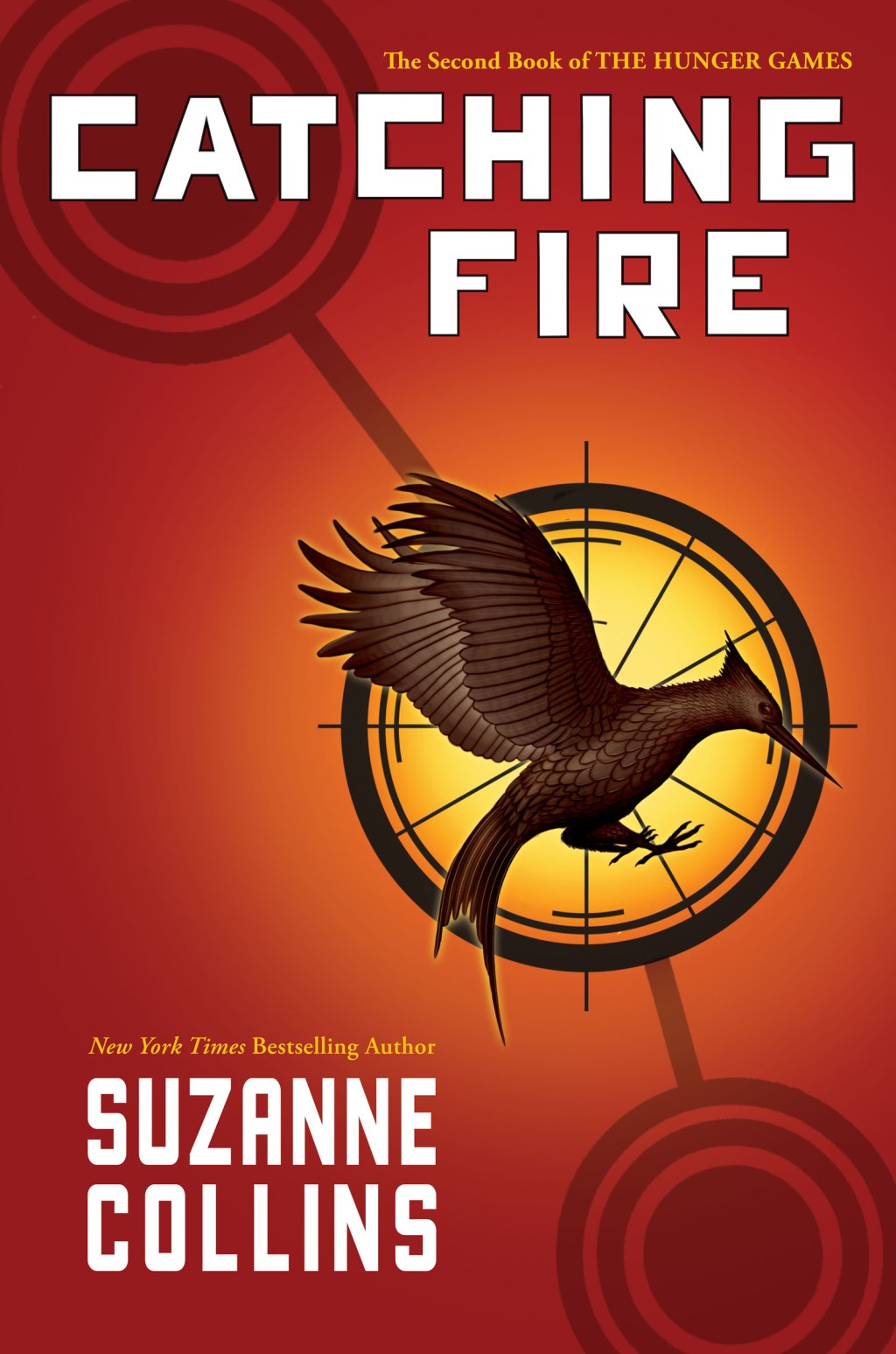
    Book Review: Catching Fire

    After finishing the first Hunger Games, it took me a little bit to get into the second book, Catching Fire. In between these books, I’ve been starting the Riyria Chronicles as well as wrapping up Brandon Sanderson’s Mistborn Era 1 series. It was in this hiatus that I came to realize my favorite books are those that are grander in scope, with a lot of moving parts. Perhaps that’s why my favorite book/movie series of all time is the Lord of the Rings. I’m always open to more recommendations along those lines! Anyways, with the Hunger Games being a more singular character focused story of survival, I wanted a change of pace after finishing the first book, so I took a brief hiatus before getting started on Catching Fire.

    However, upon starting Catching Fire, I was pleasantly surprised. Catching Fire is a book that takes the opportunity to really expand the scope of the world of Panem, giving a much greater picture of what is going on. Katniss’ actions in the first book have now spiraled beyond her, resulting in a much more dynamic world where events don’t necessarily revolve around what the main character does. In fact, one of the primary transformations in the book that will likely also carry into the third book, Mockingjay, is Katniss’ acceptance that she has started something that is out of her control, and only with her acceptance of this, can she take back control and lead what she has started.

    As the book develops, we hear about rebellions throughout Panem, many of which Katniss never even witnesses, only hears about. We also get our first true introduction to President Snow, a seemly calm, but threatening figure, who wants to be seen as having a grasp the situation developing in Panem. But as the rebellion continues, it becomes clear even he has lost control of the population, forcing him to retaliate. It is this invisible power struggle between Katniss and President Snow that defines the majority of the book. With the next Hunger Games considered a “Quarter Quell”, Snow orchestrates a game where previous winners from each district must compete. This means sending Katniss and Peeta back into the arena, with a clear intention of killing them off, essentially cutting out the figureheads of the rebellion.

    Throughout the book, and even to the end, Katniss feels a lack of control. She seems to only see people at a surface level, resulting in confusion that is evident to the reader. As she is tossed back in the arena, she wonders why people are helping her survive, what does those outside the arena think of her, or in general, what is going on. This constant stream of confusion as to what is happening around her allows the romance established in the first book to take a backseat, with Katniss forced to protect both Gale and Peeta, not out of love, but necessity and to keep her sources of stability alive.

    This book in general, feels like it is a buildup for the third book, where Katniss likely will have to accept her role in the rebellion and take charge. The invisible showdown between President and Katniss will likely come to a head with the stakes higher than ever. This is a book that got me excited to start Mockingjay and I look forward to seeing how the story concludes.

  • Higurashi – When They Cry: Ch.1 Onikakushi Review

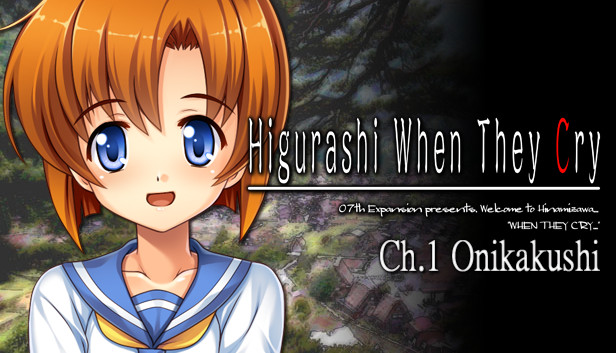
    Higurashi – When They Cry: Ch.1 Onikakushi Review

    Higurashi: When They Cry is a horror visual novel written and produced by 07th Expansion. The full game is split into eight chapters, that are each about 10 hours of gameplay. In this review, I’ll be focusing on Chapter 1: Onikakushi with 100% achievements (which are all easy to get).

    Warning: Spoilers Ahead

    Chapter 1 follows the journey of Keichii, a student from Tokyo who moves to a quiet village called Hinamizawa. At first, the game follows a typical slice-of-life formula, introducing his classmates, all girls, like a typical romance visual novel. Early on, Keichii meets Rena, Satoko, Mion, and Rika. Satoko and Rika are the kids that enjoy messing with the main character. Rena is introduced as a shy, but cute and bubbly girl. Mion is shown as confident and the leader of the pack. All in all, if Higurashi didn’t already have a reputation as a horror visual novel, one could expect Rena or Mion to eventually be a love interest to Keichii.

    In either case, the game takes its time to develop an emotional bond between Keichii and the other characters around him. For those who have previously read slice-of-life VNs, this is familiar territory, but for those looking for a scare, this can feel quite slow. I personally like the amount of time spent in slice-of-life territory. It puts the reader at ease and works to deepen the feelings of unease when the first horror elements are introduced. The first hints of these horror elements arrive when side characters are introduced. Tomitake, the cameraman from Tokyo, is the first to bring up the darker history of Hinamizawa, and what kicks off Keichii’s curiosity into the town’s past. Following the Watanagashi festival, his curiosity is only deepened and turned to fear with the introduction of Ooishi, a cop from Okinomiya. What both Tomitake and Ooishi have in common is their common identity as outsiders, at least in the villagers eyes. Neither are from Hinamizawa, therefore, neither should be there. At least, that is the vibe that is given after the story takes a dark turn….

    I love how the story takes this turn. The common identity between the side characters forces Keichii to reflect on his own identity. He, himself is from Tokyo,therefore he is also an outsider, regardless of whatever acceptance he initially felt. Keichii’s initial experience in Hinamizawa feels like an illusion that was carefully crafted by the village, to relax the prey before the town strikes. As outsiders slowly break Keichii’s illusions, the town begins to look more hideous. As the town itself realizes the gig is up, it turns on Keichii as well.

    Here is where the mystery truly begins. Characters we, along with Keichii have developed a bond with, suddenly began to act strange. Their personalities feel like a switch, going between what we already know and a hidden, murderous side. While Rena and Mion’s personalities initially feels natural, they’re sudden turn toward murderous intent makes the reader seriously question what is happening. Are they possessed? Do they just have some personality disorder that is triggered at specific points? Are they just natural killers pretending to be nice to lure in their prey? The tension is palpable and as the town turns increasely hostile towards Keichii, the reader feel the same fear and confusion as he does. By the time Keichii meets his fate, it almost feels inevitable, with the tension at an all time high. Yet, the reader is only left with more questions than answers. Why is the town like this? Is it supernatural? Is Keichii truly dead?

    Honestly, I can’t wait to pick up the next chapter and see where it goes. I look forward to discovering more about Hinamizawa and what truly drives the town.

    (Achievements Side Note): While you will naturally get most of the achievements just by reading through the story, there are two achievements you might have to go out of the way for. “Detective-Onikakushi” requires that you read all tips that are usually introduced between sub-chapters. If you miss any, make sure to read it after reading the main story. “Onikakushi Party” can be unlocked by attending the “after-party” after reading the main story. Following the main story, an “All-Cast review session” button will appear. After reading through it, you should get the achievement. I highly recommend reading it as it acknowledges many of the readers potential theories after Chapter 1 and proposes some others we might have missed!

    No comments to show.

    Leave a comment

  • Book Review: The Hunger Games

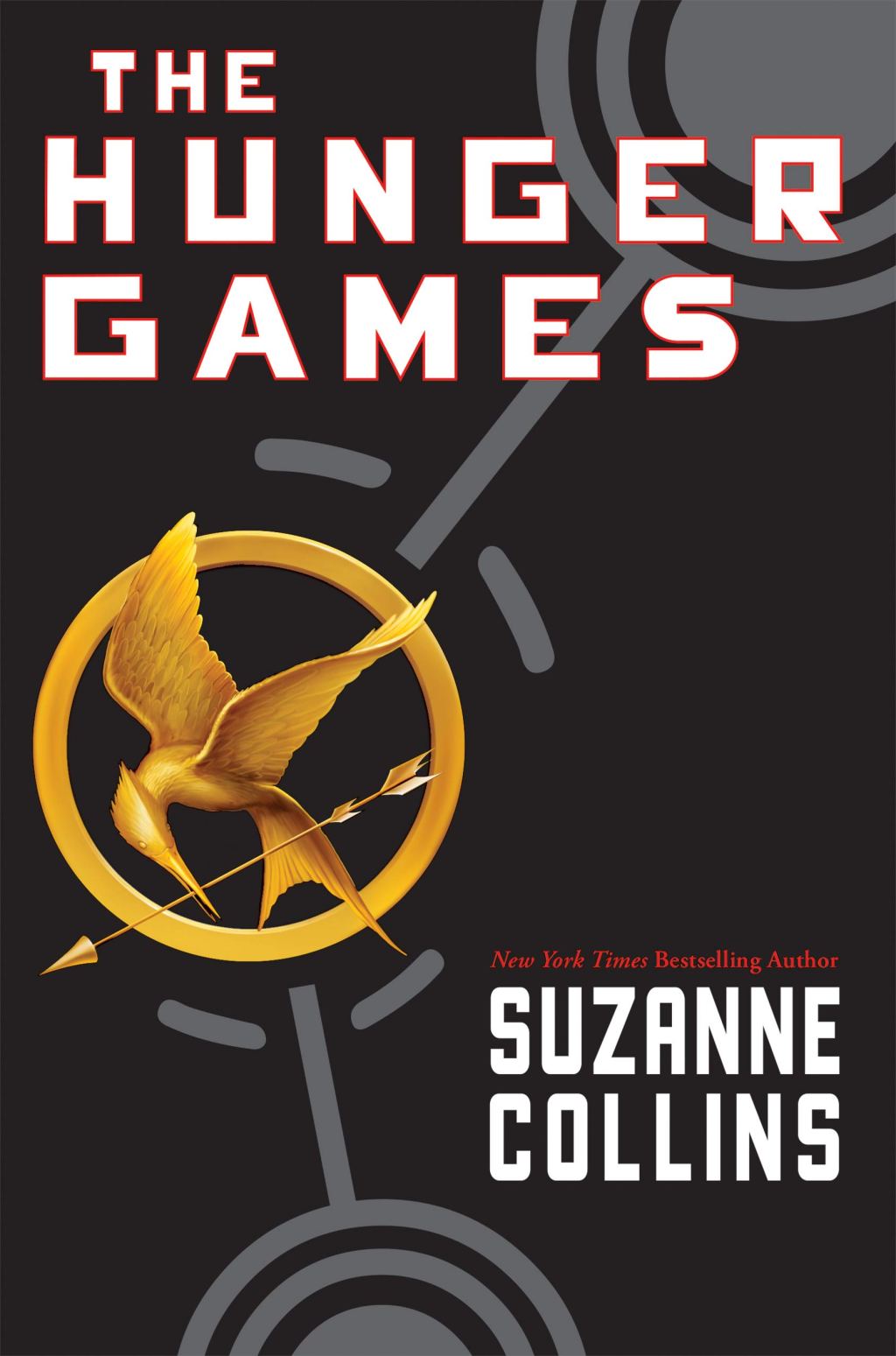
    Book Review: The Hunger Games

    Recently, I was reintroduced to YA fiction with a recommendation to read the Hunger Games by Suzanne Collins. Now, this was a book I remember reading years ago, likely around the time people begin hyping up the first movie, so around 2012. In light of the new book of the prequel series, “Sunrise on the Reaping”, releasing on March 18 of this year, I followed through with the recommendation as now is as good of a time as ever to get back into the series. So, let’s talk about it!

    The story of the Hunger Games is set in the land of Panem, an alt-history dystopian landscape of what was once the American continent. In this version of history, the North American continent was devastated by natural disasters and wars, resulting in the rise of the “Capitol” as well as 13 separate districts specialized in specific industries. The capitol ruled Panem with an iron fist resulting in one of the district rebelling, district 13. The rebellion led by district 13 resulted in other districts rebelling, leading to what’s known as the “Dark Days”. The Capitol would ultimately win out, restoring order, while also wiping out district 13. They would also establish the Hunger Games, where one boy and one girl are selected as tribute to fight to the death in an arena as a reminder of the Capitol’s power. This becomes the status quo of Panem leading us to where the book starts.

    The story of the Hunger Games is told from the perspective of Katniss Everdeen, a 16 year old girl chosen as tribute for district 12 in the 74th Hunger Games. The tone and style of writing is simplistic and straight to the point. This isn’t necessarily a choice to fit the YA category, but rather, reflective of the narrator, Katniss, and her personality. Within the first couple of chapters, the reader is already given an idea of why Katniss is the way she is. With her father dying while she was young and left to take care of her little sister, Prim, without the help of her despondent mother, survival is at the core of her personality. Early on, everything she does revolves around survival, with little time for dilly dallying. This is reflected in the straightforward writing, which in my opinion, does a good job of moving the story along at a pace that doesn’t feel like it’s dragging on for the sake of it. There are no deep internal dialogues or intricate prose. The narration early on gives us an idea of Katniss’ thoughts and what comes next. Background is provided only where it’s needed and similarly, does not overstay it’s welcome.

    Something that did catch my attention early on was the fair amount of adult themes that surprised me for a YA fiction novel… though to be fair, based off my recollection of the YA fiction I did read in the past, many probably also had strong adult themes, they just didn’t quite stick with me.

    Here, in the Hunger Games, some themes are incredibly blatant. Katniss is a walking representation of the loss of innocence, and her sister, Prim, as well as Peeta – the other tribute of district 12 – are meant to contrast that loss of innocence. In fact, their innocence is what drives Katniss’ character development throughout the novel. This is further driven home by the character, Rue, who Collins seemed to want to develop further, but instead, killed her off before she could get the spotlight in favor of further driving home the contrasts between Katniss’ lack of innocence compared to those around her. Story wise, it is used as a plot device to give Katniss another advantage, Thresh. Is this a good thing? In my opinion, it misses the mark. Rue’s lack of development makes her death unemotional and makes it hard to emphasize with how Katniss must feel, as well as finding Thresh as a later ally not really rewarding.

    Now, I want to talk a bit about the romance in the novel. Overall, the romance in the Hunger Games feels quite natural and isn’t overbearing. It is clear that a love triangle of sorts is being setup between Gale and Peeta vying for Katniss. Certainly, at least in the first book, Peeta is the focus, with Katniss’ confusion playing a fake love story conflicting with her true emotions leaving Peeta, as well as the reader, equally confused as to how she ultimately feels. Again, Collins succeeds in making the inner conflict feel natural. After Peeta’s initial confession before the Hunger Games, Katniss realizes she’s going to have to play a narrative. After faking something long enough, it can become hard to separate what’s real and what’s fake. Clearly, Katniss has to deal with this distinction, but ultimately, is left to be resolved in the next books in the series.

    Overall, the Hunger Games starts off strong, developing Katniss as a character the audience can reliably root for. The world of Panem is also introduced, grand in scope, but localized in the story so that a narrative can be told. I look forward to see what happens next in Panem.

    No comments to show.

    Leave a comment